How to make money doing what you love (1,000 True Fans)
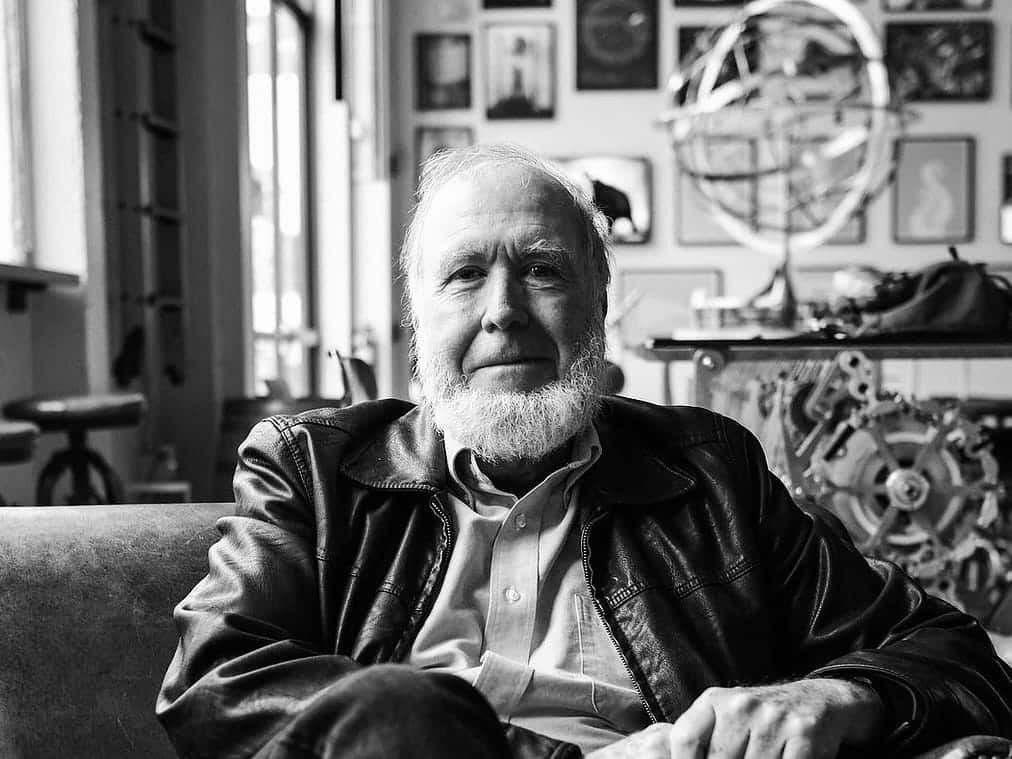
“To be a successful creator you don’t need millions. You don’t need millions of dollars or millions of customers, millions of clients or millions of fans. To make a living […], you need only thousands of true fans.” — Kevin Kelly
Why it works
Kevin Kelly (pictured) is one of the most influential thinkers on technology, creativity, and the future of work. As the founding executive editor of Wired magazine and author of several bestselling books, he has spent decades studying how technology changes what humans can create, share, and monetize. In 2008, he published one of his most famous essays: 1,000 True Fans. Its core idea is simple: to make a living doing what you love, you don’t need a mass audience. You need a small group of people who deeply value your work and are willing to support it.
Kelly’s math is straightforward: if 1,000 true fans each spend $100 a year on what you offer, that’s $100,000 in annual revenue. If they spend more on your products or services, the upside can be much larger. This is now more attainable than ever because of the internet, which has massively broadened the possible space of careers. As Naval Ravikant has argued, the fundamental property of the internet is that it connects every human to every other human on the planet. Before the internet, the ability to monetize a niche obsession was limited by geography, gatekeepers, and local demand. Today, almost any passion can find its audience. You no longer need masses of people to care. You only need a small number of people to care deeply.
Last month’s newsletter was about code-based leverage, notably agentic AI. This month’s edition is about media-based leverage. Examples include social media posts, newsletters, articles, and books. Unlike people and capital, which require permission, media can be created and distributed without anyone’s approval. You can publish your ideas today. And if your content is authentic, useful, and consistent, it will attract true fans, build trust, and eventually become the foundation of a business. According to Kelly, you need to meet two criteria to make the 1,000 True Fans model work: you need to create enough each year to earn, on average, $100 from each true fan; and you need to have a direct relationship with them so they can pay you directly. One of the best ways to pull that off is by writing online and building a newsletter. Here’s how to get started in three simple steps.
How to do it
1) Set it up
To start your newsletter, you need just two things: a name and a platform. There are many ways to come up with your newsletter name. Three that I share with my coaching clients are based on memorable numbers, categories, or anti-categories. A popular example of a numbers-based newsletter is James Clear’s 3-2-1 newsletter, where each edition includes 3 short ideas from him, 2 quotes from others, and 1 question for the reader to think about. A great category-based newsletter name is Ben Meer’s System Sunday, which is all about the best systems for personal growth. And this newsletter, Beyond Productivity, is an example of an anti-category newsletter, because it’s all about transcending traditional, narrow productivity advice.
The three most popular newsletter platforms are Substack, Beehiiv, and Kit. I started this newsletter on Substack in 2021, moved it to Beehiiv in 2024, and will move it to Kit this month (more on this soon). The platform matters less than the habit of writing and publishing. That said, if I were starting today, I’d choose Kit, especially if the goal is not just to write, but to build a business around it. Kit is built around stronger creator funnels, making it easier to guide readers from subscribers to coaching clients, course buyers, or book readers. Its automations are more powerful, so I can create more personalized journeys based on what people sign up for, click on, or care about. Last but not least, Kit’s Creator Network offers a powerful path for growing the newsletter.
If you already know what you’re passionate about, use one of these three approaches to find a strong name for your newsletter and set it up on Kit here. If you’re not sure what to write about, the tips in this article will help you find a unique angle you can share.
2) Write it
To write your newsletter, you only need two things: structure and cadence. While you don’t need to follow the same structure in every edition, doing so comes with three major advantages. First, it makes writing each edition much simpler. James Clear has a spreadsheet where he collects short ideas, quotes from others, and interesting questions for his readers. This allows him to write his newsletter in less than two hours. Second, having a structure you stick with makes it easier for readers to consume your content, because they always know what to expect. Third, maintaining the same structure forces you to organize your thinking. This helps you develop your own frameworks, which you can then turn into services, such as coaching or speaking, and products, such as courses or books.
All three newsletters I mentioned above come with a clear structure. Clear has his 3 short ideas, 2 quotes from others, and 1 question. Meer’s System Sunday is always structured around three elements where he explains what the system will help people with (impact), how to create it (setup), and how to keep it up (maintenance). My newsletter follows a simple ‘what, why, how’ structure, which tells people what the newsletter is about in the headline, why it works, and how to do it. There’s no right or wrong here. Pick a structure that readers can consume in five minutes or less and that you’ll stick to. Create your own 3-2-1 or 1-2-3 numbers-based structure, come up with three elements that work for your category, or simply steal my ‘what, why, how’ structure. You’re welcome!
In terms of cadence, go for what you can ambitiously and realistically commit to. I used to follow a weekly cadence for years, but switched to monthly so that I could think more deeply about each edition. Weekly, twice monthly, and monthly all work. The best cadence is the one you can sustain long enough for trust to compound. Pick your cadence and then start growing your newsletter.
3) Grow it
Once you have set up your newsletter and started working on your first edition, your goal is to get your 1,000 true fans to subscribe. The best way to do that is to use social media as feeder channels. A feeder channel is a platform where people can discover you and join your newsletter. A single social post can be read by thousands or even millions of people and turn many of them into newsletter subscribers. If you’re into personal or professional growth, the best feeder channel is LinkedIn. It’s where ambitious people spend time. If you write about productivity, leadership, performance, entrepreneurship, coaching, writing, business, or other personal growth topics, your ideal readers are probably already there.
The easiest way to start growing your newsletter via LinkedIn is to reach out to your connections and tell them about your free newsletter. Here’s a shortened version of the message I used to do just that when I got started: “Hi X. I just started a newsletter that is all about short, practical and science-based productivity tips to help you thrive as a knowledge worker. You can find it here: URL. If you like it, I’d be thrilled if you’d sign up and share the newsletter with one or two friends who might like it as well.”
If you want to scale your newsletter via LinkedIn, you need to create content. Write consistently about what you know, what you are learning, what you are building, and the problems you help people solve. By doing this, my co-author Eric Partaker and I built a 1+ million audience across LinkedIn (1,000,000+ followers) and our newsletters (200,000+ subscribers) in just 12 months, created a seven-figure business from our LinkedIn thought leadership through services (e.g. coaching) and products (e.g. courses), and got a book deal with Portfolio Penguin for our first book.
I often meet aspiring authors, creators, executives, entrepreneurs, and leaders who are waiting for permission.
They are waiting for the right time or perfect clarity before they start. But clarity does not come before action. It comes from action.
Here’s what I learned from writing online for five years:
You discover your voice by writing. You discover your audience by publishing. You discover your offer by serving. And you discover what you love by doing the work long enough to see what keeps pulling you forward.
When I started, I did not know exactly where Beyond Productivity would lead. I only knew that I wanted to help ambitious people perform at a high level without sacrificing their health, peace of mind, or relationships. That was enough to get started. And getting started changed everything for me.
Here’s my question for you this month:
What niche obsession, deep passion, or hard-earned lessons could you start sharing with the world?
And here’s my challenge for you:
Take the first step this week.
Pick a name and set up your newsletter on Kit.
Commit to a structure and cadence that works for you.
Then start posting on LinkedIn to get your 1,000 true fans.
And if you are an aspiring author, creator, executive, entrepreneur, or leader who wants to make money doing what you love, this is exactly what I help people do.
If you want my support in building an audience and selling your services, products, or book, I’m now working with five clients at a time and have a few open 1:1 coaching seats. You can learn more and book a free discovery call with me here.
You don’t need millions to make money doing what you love.
You only need those 1,000 true fans.
Start helping them find you today.